Pay in installments of $6.57 with
 ,
,
 and
and

Shipping Estimate
USA
- USA
- CAN
- USA
- CAN
Ships within 48 hours · Estimated delivery Jun 29 - Jul 4
 Promo Codes Available:
For Your Every Summer RSVP, with Code: SUMMER15
Description
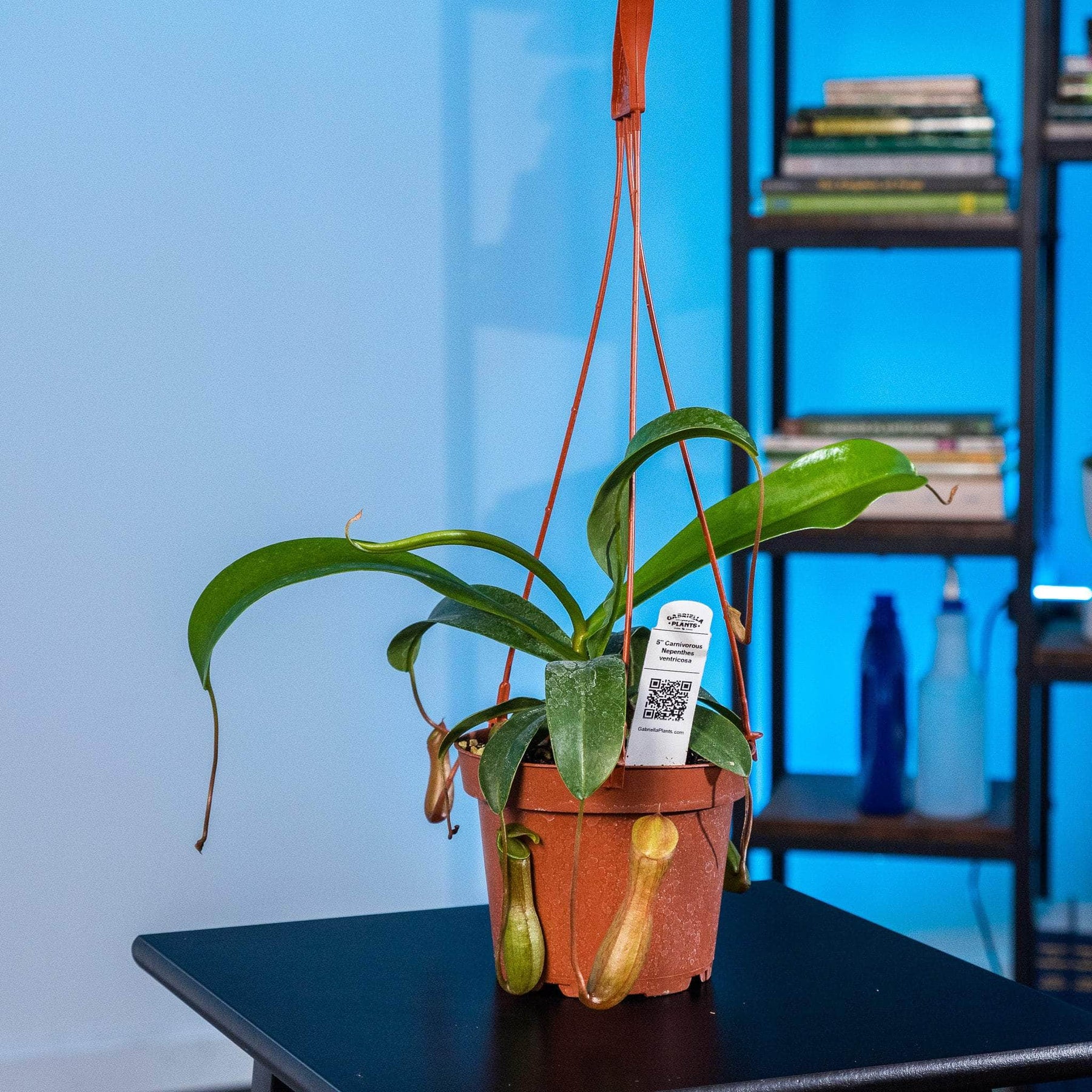
hanging pitcher plant indoor Carnivorous Nepenthes ventricosaNepenthes ventricosa has a compact growth habit with narrow, short leaves and medium length tendrils. The pot bellied pitchers can vary in structure and coloration anywhere from pink with red splotches to green with pink splotches and many combinations in between, their large mouths are ridged in pink to red. Keep in a warm and bright spot with some humidity, appreciates a bit of morning sun avoid mid day direct sunlight. Ensure the medium never dries
Nepenthes ventricosa has a compact growth habit with narrow, short leaves and medium length tendrils. The pot bellied pitchers can vary in structure and coloration anywhere from pink with red splotches to green with pink splotches and many combinations in between, their large mouths are ridged in pink to red.
Keep in a warm and bright spot with some humidity, appreciates a bit of morning sun - avoid mid day direct sunlight. Ensure the medium never dries out completely, maintain consistent moisture but be sure it has proper drainage and does not remain soggy- do not allow your Nepenthes to sit in water. Use rainwater, distilled water or reverse osmosis water. Be careful with bottled water as these may contain salt which will kill your pitcher plant.
Something that can be found on a variety of plants is extrafloral nectaries or EFNs. These glands produce a nectar that over time, will oxidize and dry, leaving behind a hard, dark-colored spot of concentrated sugar. For most plants it attracts insects like ants to protect them from herbivores, but for carnivorous plants, it can also attract insects that the plant will eat. Sometimes, because of the high levels of humidity, saprophytic fungi or mold, will grow on the sugar residue. This forms a harmless "sooty mold" that looks like black, fuzzy spots around the nectar glands. The black spots are, in most cases, a sign of a healthy, active plant, rather than a sign of disease. They can be gently wiped off with a damp cloth.
Shipping Notes
- Free Standard Shipping on $100+ Orders to the USA.
- Except Preorder products are shipped in 48 hours.
- Delivery to the USA:
- Standard Shipping : 3-10 business days
- If time is of the essence, please consider selecting expedited delivery for faster service.
Exchange/Return Notes
- We offer a 30-day return/exchange service after receiving.
- Final sale items are not eligible for returns or exchanges.
- To process your return/exchange, please contact us at [email protected]
- Please click here for more details>>> Return & Exchange Policy